Prologue
Cosmic Sociology Axioms
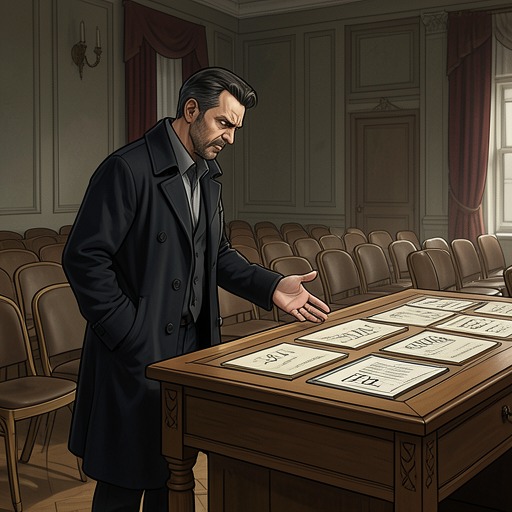
At Yang Dong’s grave, [Ye Wenjie](entity:character-recall-character-ye-wenjie-141819486b31) tells [Luo Ji](entity:character-recall-character-luo-ji-45cccd7e79e9) two foundational axioms for a sociology of cosmic civilization: survival is civilization’s primary need, and civilization expands while the universe’s total matter remains fixed. She also names the [Chain of Suspicion](entity:concept-recall-concept-chain-of-suspicion-60901f5bcd13) and [Technological Explosion](entity:concept-recall-concept-technological-explosi-8143ab4d09fb) as the concepts needed to derive the larger theory.
The conversation becomes the hidden seed of Luo Ji’s later Wallfacer mission. Only the [Ant](entity:creature-recall-creature-ant-5c0afb27e81e) and the [Sophons](entity:concept-recall-concept-sophons-6b7cdcb98bf3) witness the exchange, while Ye Wenjie leaves to meet her final fate.
Shortly before the Wallfacer Project
Evans Learns Human Deception
Aboard [Judgment Day](entity:object-recall-object-judgment-day-e3c5c2852736), [Mike Evans](entity:character-recall-character-mike-evans-0059836ae017) learns from the [Trisolarans](entity:creature-recall-creature-trisolarans-e9c1128e1b5b) that they cannot understand human culture because humans can think one thing and say another. Through the story of the wolf and the children, Evans explains deception, lying, and strategic concealment.
The Trisolarans realize that humanity’s opacity makes it dangerous. Their final exchange ends with the admission that they need humanity but are also afraid of it, a fear that later shapes the [Wallfacer Project](entity:organization-recall-organization-wallfacer-projec-9a121b2bb387) and the abandonment of the [Earth-Trisolaris Organization](entity:organization-recall-organization-earth-trisolaris-c263c3e049c9).
Year 3 Crisis Era
Space Force Formation
China establishes the [Chinese Space Force](entity:organization-recall-organization-chinese-space-fo-b67a673d47a5) as the military foundation for a future interstellar conflict. [Chang Weisi](entity:character-recall-character-chang-weisi-76062e11da36) warns its first officers that centuries will pass before the force reaches combat readiness, and that none of them will live to see the fleet they are building.
[Zhang Beihai](entity:character-recall-character-zhang-beihai-40cc8a5f7859) joins the new branch while Wu Yue reacts with despair to its hopeless timetable. Their differing beliefs about technology, duty, and victory begin a relationship that will eventually push Zhang toward a secret and radical course.
Year 3 Crisis Era
The Sophon Defense Panic
A mistaken missile launch against discarded space-station film is presented as a successful defense against a lower-dimensional [Sophon](entity:object-recall-object-sophon-f86308da25b1). At the same time, public reports deny that several mysterious deaths were caused by Sophon attacks, while physicists explain that [Sophons](entity:concept-recall-concept-sophons-6b7cdcb98bf3) cannot normally harm people at macroscopic scale.
The episode reveals how wartime institutions manufacture confidence from technical confusion. It also shows humanity attempting to defend itself against an enemy whose true capabilities remain poorly understood.
Year 3 Crisis Era
The Escape Fund Scam
[Miao Fuquan](entity:character-recall-character-miao-fuquan-9cb2ff87e509) introduces [Zhang Yuanchao](entity:character-recall-character-zhang-yuanchao-8a687e8ddd43) and [Yang Jinwen](entity:character-recall-character-yang-jinwen-381135a19db5) to an alleged escape fund, promoted by [Shi Xiaoming](entity:character-recall-character-shi-xiaoming-63076c3cd8fa). Zhang, frightened for the future of his unborn grandson, pays a large sum for a chance to preserve his family line.
The [United Nations](entity:organization-recall-organization-united-nations-ab3732a83729) then declares [Escapism](entity:concept-recall-concept-escapism-1e58445ee4ed) illegal through Resolution 117, exposing the scheme as a scam and leaving Zhang devastated. The episode dramatizes the central political problem of escape: deciding who may live when not everyone can flee.
Year 3 Crisis Era
The Wallbreaker Revival
The Second Wallbreaker, preparing to commit suicide, receives a real-time message from [Trisolaris](entity:location-recall-location-890fa9d0025a) and learns that the Lord still needs him. The [Sophons](entity:concept-recall-concept-sophons-6b7cdcb98bf3) confirm their identity through the poisoned goldfish and the password to Evans’s encrypted letter.
The [Trisolarans](entity:creature-recall-creature-trisolarans-e9c1128e1b5b) order him to undermine human escape plans and warn that they fear opaque human minds. Their renewed contact revives the [Earth-Trisolaris Organization](entity:organization-recall-organization-earth-trisolaris-c263c3e049c9)’s Adventist remnant and launches the [Wallbreaker Project](entity:organization-recall-organization-wallbreaker-proj-632a5860c7cb) against the newly created Wallfacers.
Year 3 Crisis Era
The Three Body Organization Returns
In the [Three Body virtual world](entity:location-recall-location-8c51ba8e0f74), [King Wen of Zhou](entity:character-recall-character-king-wen-of-zhou-9329fcebcfa8) and [Newton](entity:character-recall-character-newton-149a82a13123) discover that the organization has been reactivated. The [Adventists](entity:organization-recall-organization-adventists-9cbb6c16a4ea) are now the principal surviving faction after the collapse of the [Redemptionists](entity:organization-recall-organization-redemptionists-bf4764c1a6f5) and the separation of the [Survivors](entity:organization-recall-organization-survivors-c950bd9378de).
The virtual meeting shows the organization rebuilding itself through concealed online spaces. The [Sophons](entity:concept-recall-concept-sophons-6b7cdcb98bf3)’ renewed support gives its members access to information but not the technology they crave, leaving them dependent on [Trisolaris](entity:location-recall-location-890fa9d0025a).
Year 3 Crisis Era
Humanity Faces Escapism
The [United Nations](entity:organization-recall-organization-united-nations-ab3732a83729) debates whether humanity should build ships to flee [Earth](entity:location-recall-location-dd4e41a8f628), settle a new world, live permanently in space, or hope for eventual coexistence with [Trisolaris](entity:location-recall-location-890fa9d0025a). Developed and developing nations fight over access to aerospace technology, and the proposed United Earth Space Force collapses.
The debate demonstrates that the crisis has not erased national rivalry or inequality. More deeply, it reveals that humanity’s most serious obstacle to escape is not propulsion or life support, but the moral and political question of who goes and who remains.
Year 3 Crisis Era
Zhang Beihai’s Hidden Resolve
The [Chinese Space Force](entity:organization-recall-organization-chinese-space-fo-b67a673d47a5) begins work amid widespread defeatism. [Zhang Beihai](entity:character-recall-character-zhang-beihai-40cc8a5f7859) publicly argues that technological inferiority does not determine the final outcome and advocates a high-tech strategy based on interstellar-capable radiation-drive ships.
Privately, his father’s cryptic advice—“think some more”—becomes a code for action. Zhang secretly prepares to preserve a future military seed, while presenting himself as a loyal triumphalist to the institution around him.
Year 3 Crisis Era
Luo Ji’s Abduction
After surviving a traffic accident that kills a recent lover, [Luo Ji](entity:character-recall-character-luo-ji-45cccd7e79e9) is taken into protective custody by [Shi Qiang](entity:character-recall-character-shi-qiang-46cf3fb97959). He learns that the surrounding security operation is far larger than any ordinary murder investigation and that the ETO may be targeting him.
Shi Qiang teaches him the logic of interrogation, deception, and concealment, insisting that real cunning often looks like carelessness. Their uneasy partnership begins as a security assignment but becomes the central human relationship of Luo Ji’s life.
Year 3 Crisis Era
The Wallfacer Project Begins
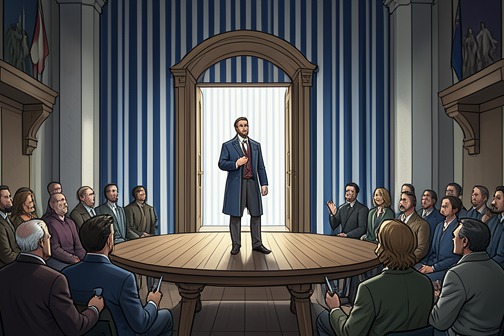
At the [United Nations building](entity:location-recall-location-497c74133fe1), [Say](entity:character-recall-character-say-dc928c712f3b) announces the [Wallfacer Project](entity:organization-recall-organization-wallfacer-projec-9a121b2bb387). Because [Sophons](entity:concept-recall-concept-sophons-6b7cdcb98bf3) can observe every external plan but cannot read private thought, four individuals will be granted immense authority to design strategies entirely within their minds and hide them behind public deception.
[Frederick Tyler](entity:character-recall-character-frederick-tyler-78bc534121ad), [Manuel Rey Diaz](entity:character-recall-character-manuel-rey-diaz-973388dd46ac), [Bill Hines](entity:character-recall-character-bill-hines-1bf03c4063ff), and [Luo Ji](entity:character-recall-character-luo-ji-45cccd7e79e9) are chosen. Luo Ji is stunned to find himself named alongside celebrated statesmen and scientists, while the world immediately turns him into an inscrutable strategic symbol.
Immediately after the Wallfacer announcement
Luo Ji Rejects the Mission
[Luo Ji](entity:character-recall-character-luo-ji-45cccd7e79e9) refuses the Wallfacer position, but [Say](entity:character-recall-character-say-dc928c712f3b) accepts his refusal without objection. He leaves the [United Nations Plaza](entity:location-recall-location-b163df84ca83) and is immediately attacked by an ETO assassin, surviving only because he had accepted security protection after the attack was offered.
The assault teaches him that a Wallfacer cannot simply resign. Once the world knows he may be acting, every refusal, indulgence, or apparent idleness can itself be part of a hidden plan. The famous [Wallfacer smile](entity:concept-recall-concept-wallfacer-smile-752e1999086a) becomes the public response to his uncertainty.
Year 3 Crisis Era
Luo Ji Claims Paradise
[Luo Ji](entity:character-recall-character-luo-ji-45cccd7e79e9) invokes his Wallfacer authority to obtain a remote estate with snow peaks, a lake, forests, grasslands, modern comforts, and a fireplace. He asks that the location never be disclosed, preserving the feeling of a world without a map.
The estate becomes his refuge from the crisis and a public joke called “part of the plan.” Yet the private setting also creates the conditions for the deepest emotional transformation in his life.
Early Wallfacer period
Tyler’s Mosquito Swarm Plan
[Frederick Tyler](entity:character-recall-character-frederick-tyler-78bc534121ad) proposes a fleet of tiny space fighters carrying hundred-megaton hydrogen bombs. The fighters would travel as a networked swarm, use hibernating human pilots, and launch suicide attacks against Trisolaran warships.
The plan is direct enough to invite suspicion, but its dependence on sacrifice reflects Tyler’s growing conviction that modern humanity lacks the discipline required for the coming war. He begins searching across the world for a culture willing to revive the spirit of the kamikaze.
Early Wallfacer period
Rey Diaz Builds Superbombs
[Manuel Rey Diaz](entity:character-recall-character-manuel-rey-diaz-973388dd46ac) orders Los Alamos to design a stellar hydrogen bomb with a yield of at least two hundred megatons. The weapon is modeled through a virtual stellar simulation, with astrophysicist William Cosmo brought in to help represent its miniature sunlike combustion.
Rey Diaz presents the bomb as the most powerful mature weapon available to humanity. His insistence on a weapon that is inefficient in space combat begins concealing a far more destructive planetary strategy.
Early Wallfacer period
Hines Proposes Mental Enhancement
[Bill Hines](entity:character-recall-character-bill-hines-1bf03c4063ff) and [Keiko Yamasuki](entity:character-recall-character-keiko-yamasuki-f276c0b5c4a8) decide to turn neuroscience into a planetary-scale project. Their public aim is to accelerate human intelligence, imagination, learning, and endurance so that future generations can escape the [Sophon](entity:object-recall-object-sophon-f86308da25b1) barrier.
Their plan is rooted in Hines’s discovery that thought operates at the quantum level. Although he claims that enhanced minds will rescue humanity, the research quietly moves toward controlling judgment rather than expanding independent thought.
First five years of Luo Ji’s Wallfacer mission
The Garden of Eden Family
[Luo Ji](entity:character-recall-character-luo-ji-45cccd7e79e9) asks [Shi Qiang](entity:character-recall-character-shi-qiang-46cf3fb97959) to find the woman from his imagined dream life. Shi reconstructs her appearance and character from Luo Ji’s descriptions, then finds [Zhuang Yan](entity:character-recall-character-zhuang-yan-47f6788c974a), a young graduate of the Central Academy of Fine Arts who seems to embody his ideal.
Luo Ji brings her to the [Garden of Eden Estate](entity:object-recall-object-garden-of-eden-estate-60465484cdbe), lights the fireplace, and creates a family with her. Their love, marriage, and daughter Xia Xia give him five years of private happiness and allow him to retreat almost completely from the fate of humanity.
During Luo Ji’s first five years as Wallfacer
The Louvre Journey
[Luo Ji](entity:character-recall-character-luo-ji-45cccd7e79e9) takes [Zhuang Yan](entity:character-recall-character-zhuang-yan-47f6788c974a) to the [Louvre](entity:location-recall-location-ab893fc37fa8), where they discuss Renaissance art, cultural survival, and the possibility of communicating through human expressions that [Sophons](entity:concept-recall-concept-sophons-6b7cdcb98bf3) cannot understand. Before the Mona Lisa, they playfully attempt to exchange messages through their eyes.
The visit deepens their intimacy and foreshadows the importance of human opacity. Their shared language of gazes becomes a private world that contrasts with the transparent surveillance imposed by [Trisolaris](entity:location-recall-location-890fa9d0025a).
Year 8 Crisis Era
Tyler’s Wallbreaker Appears
A timid, poorly dressed man visits [Frederick Tyler](entity:character-recall-character-frederick-tyler-78bc534121ad) and announces that he is Tyler’s Wallbreaker. He reconstructs Tyler’s apparent mosquito strategy and identifies the hidden role of water-bearing bodies such as Europa, Ceres, and comets.
The Wallbreaker concludes that Tyler intends to betray [Earth](entity:location-recall-location-dd4e41a8f628)’s fleet, offer the [Trisolarans](entity:creature-recall-creature-trisolarans-e9c1128e1b5b) an enormous iceberg, and then seize control of the swarm to destroy the [Trisolaran Fleet](entity:organization-recall-organization-trisolaran-fleet-962dfb0cd6ac). Tyler recognizes that the plan has been exposed and that [Trisolaris](entity:location-recall-location-890fa9d0025a) simply does not care.
Year 8 Crisis Era
Tyler’s Suicide
After his Wallbreaker’s analysis becomes public, Tyler confesses that the apparent strategy was indeed his true plan, but the PDC refuses to prosecute him because his admission may itself be deception. The Wallfacer system absorbs even his demand for punishment into its logic of uncertainty.
Tyler kills himself after realizing that humanity will continue to treat his breakdown as part of a brilliant hidden plan. His death confirms the tragic circularity of the project: a Wallfacer can escape the system only by destroying himself.
Year 8 Crisis Era
Luo Ji’s Family Is Taken
After Tyler’s death, the PDC removes [Zhuang Yan](entity:character-recall-character-zhuang-yan-47f6788c974a) and Xia Xia from the [Garden of Eden Estate](entity:object-recall-object-garden-of-eden-estate-60465484cdbe) and places them in hibernation. [Say](entity:character-recall-character-say-dc928c712f3b) tells [Luo Ji](entity:character-recall-character-luo-ji-45cccd7e79e9) that they are being preserved for doomsday and that their removal is intended to force him to begin working.
Luo Ji is devastated, but Say reveals that [Trisolaris](entity:location-recall-location-890fa9d0025a) itself ordered the earlier assassination attempt against him. He realizes that his forgotten conversation with [Ye Wenjie](entity:character-recall-character-ye-wenjie-141819486b31) may contain the reason for Trisolaris’s fear and accepts that he must become his own Wallbreaker.
Winter of Year 8 Crisis Era
The Dark Forest Insight
[Luo Ji](entity:character-recall-character-luo-ji-45cccd7e79e9) reconstructs [Ye Wenjie](entity:character-recall-character-ye-wenjie-141819486b31)’s two axioms and finally understands the [Chain of Suspicion](entity:concept-recall-concept-chain-of-suspicion-60901f5bcd13) and [Technological Explosion](entity:concept-recall-concept-technological-explosi-8143ab4d09fb). He concludes that every civilization must fear another civilization’s potential growth, while no civilization can safely trust another’s intentions.
The universe is therefore a dark forest in which every civilization hides and hunts. Because announcing a civilization’s location invites destruction, the only rational response to discovering another civilization is to eliminate it before it can become a threat.
Year 8 Crisis Era
The First Spell Transmission
[Luo Ji](entity:character-recall-character-luo-ji-45cccd7e79e9) proposes broadcasting a coded stellar position through the Sun’s amplification effect. The target is the star system [187J3X1](entity:location-recall-location-187j3x1-e9f25864962d), selected far enough away that its destruction cannot immediately endanger [Earth](entity:location-recall-location-dd4e41a8f628).
He calls the message a spell and announces that its effects may be catastrophic. Humanity interprets the plan as mysticism, but Luo Ji is secretly testing whether exposing a civilization’s coordinates will provoke destruction under dark-forest conditions.
Year 8 Crisis Era
Luo Ji Contracts the Virus
Before hibernation, [Luo Ji](entity:character-recall-character-luo-ji-45cccd7e79e9) contracts the bed flu, which is revealed to be a genetic weapon designed to recognize his individual biology. His organs begin to fail, and modern medicine cannot save him.
He is placed into hibernation while the spell is broadcast through the Sun. The weapon and the transmission show that [Trisolaris](entity:location-recall-location-890fa9d0025a) is still willing to use extraordinary measures to eliminate him before his theory can be proven.
Year 12 Crisis Era
The Probe Discovery
Hubble II detects ten small objects racing ahead of the [Trisolaran Fleet](entity:organization-recall-organization-trisolaran-fleet-962dfb0cd6ac). Their tracks show that they are probes capable of accelerating much faster than the fleet’s main warships and will reach the [Solar System](entity:location-recall-location-a098f072ea38) decades earlier.
Fitzroy and Ringier connect the probe launch date to [Luo Ji](entity:character-recall-character-luo-ji-45cccd7e79e9)’s spell transmission and [Trisolaris](entity:location-recall-location-890fa9d0025a)’s renewed assassination order. Humanity realizes that the probes may be responses to a threat whose nature remains hidden from everyone except Luo Ji.
Year 12 Crisis Era
The Space Elevator Triumph
Humanity completes the first space elevators, including [Tianti III](entity:location-recall-location-ec0425f63ee8) on [Verne Island](entity:location-recall-location-f2bd80ae2996). The elevators transform access to orbit and enable large-scale construction of space infrastructure.
The breakthrough creates hope while the [Earth](entity:location-recall-location-dd4e41a8f628) economy returns to rationing and wartime hardship. It also establishes the industrial foundation from which the future space fleets will be built.
Year 12 Crisis Era
Zhang Beihai’s Assassinations
[Zhang Beihai](entity:character-recall-character-zhang-beihai-40cc8a5f7859) secretly kills three senior aerospace figures during a space-station group photograph. He uses meteorite fragments as bullets so the deaths appear to be caused by a meteor shower.
The murders remove key opponents of radiation-drive spacecraft and help force the space program toward interstellar-capable propulsion. Zhang’s hidden mission is not ordinary triumphalism: he is preparing a ship that can preserve a human seed beyond the doomed [Solar System](entity:location-recall-location-a098f072ea38).
Year 12 Crisis Era
The Fusion Breakthrough
[Ding Yi](entity:character-recall-character-ding-yi-221d20ed39a3) announces a breakthrough in controlled nuclear fusion. The test base’s waste heat creates a brief artificial spring, symbolizing the sudden technological acceleration that humanity has achieved despite the [Sophon](entity:object-recall-object-sophon-f86308da25b1) blockade.
The breakthrough triggers a struggle between advocates of media-propelled spacecraft and supporters of radiation-drive ships. [Zhang Beihai](entity:character-recall-character-zhang-beihai-40cc8a5f7859) recognizes that the choice will determine whether humanity can reach beyond the [Solar System](entity:location-recall-location-a098f072ea38).
Year 20 Crisis Era
Mental Seal Discovery
The Resolving Imager allows Hines and [Keiko Yamasuki](entity:character-recall-character-keiko-yamasuki-f276c0b5c4a8) to observe dynamic neural activity. During testing, a subject who rejects the proposition “water is toxic” becomes convinced that water is deadly after an enhanced scan alters his judgment mechanism.
The researchers name the process the [Mental Seal](entity:object-recall-object-mental-seal-ee93833046da). It can impose a conclusion without reasoning, creating an unshakeable belief that may later prove false but will remain psychologically real.
Year 20 Crisis Era
The Faith Center Opens
The UN authorizes a [Faith Center](entity:object-recall-object-faith-center-1c2476fa4eb6) where space-force members may voluntarily receive a [Mental Seal](entity:object-recall-object-mental-seal-ee93833046da) imprinting belief in victory. The procedure is presented as a compromise between mental freedom and the military need for morale.
Thousands of officers accept the seal, forming the [Imprinted](entity:organization-recall-organization-imprinted-d275e3deaa81). Hines secretly alters the devices so that his own hidden proposition is implanted as defeatism, creating a long-term danger buried within the military.
Year 20 Crisis Era
Rey Diaz’s Mercury Plan
Rey Diaz moves his stellar hydrogen bomb tests to [Mercury](entity:location-recall-location-419bf818b5dd) and orders the creation of a planetary base. The test produces a huge explosion, ejects rock into orbit, and gives Mercury a thin ring.
His Wallbreaker reveals that Rey Diaz plans to place millions of bombs on Mercury, push the planet into the Sun, and trigger a chain reaction that destroys the [Solar System](entity:location-recall-location-a098f072ea38). The strategy is intended to force [Trisolaris](entity:location-recall-location-890fa9d0025a) to choose between surrender and mutual extinction.
Year 20 Crisis Era
Rey Diaz’s Cradle Threat
At the PDC hearing, Rey Diaz reveals that his dead-man switch allegedly controls bombs in New York and later [Mercury](entity:location-recall-location-419bf818b5dd). If his life signs cease, the [Cradle System](entity:object-recall-object-cradle-system-2d063773501d) will detonate the weapons.
The threat forces the PDC to allow him to leave and return to Venezuela. Rey Diaz then admits that the device was a bluff, but the deception exposes how Wallfacer privileges can turn humanity’s own fear into a weapon.
Year 20 Crisis Era
Rey Diaz Is Stoned
Rey Diaz returns to Caracas and addresses a crowd beneath the statue of Simón Bolívar. His own people stone him to death, convinced that his plan would have killed everyone on [Earth](entity:location-recall-location-dd4e41a8f628).
His death ends the second Wallfacer strategy and demonstrates that even a Wallfacer protected by international law cannot survive public judgment once humanity believes he has threatened its immediate existence.
Between Years 20 and 205 Crisis Era
The Great Ravine
After space-defense spending, environmental collapse, and global famine, humanity enters the [Great Ravine](entity:event-recall-event-great-ravine-17491818b6e9). The world population falls from 8.3 billion to 3.5 billion over roughly half a century, while famine, desertification, and political repression destroy the old order.
The catastrophe produces a second Enlightenment and [Second Renaissance](entity:state-recall-state-second-renaissance-1d069344dfe9). Humanity abandons the early wartime strategy, restores living standards through genetic agriculture and fusion technology, and adopts Civilization Immunity: human welfare and the continuation of civilization must come before military sacrifice.
After the Great Ravine and before Year 205 Crisis Era
Fleet International Emerges
Once prosperity returns, humanity rebuilds the space program under strict limits designed to protect ordinary life. The great fleets become independent political and economic powers: the [Asian Fleet](entity:organization-recall-organization-asian-fleet-5f0c47a5558e), [European Fleet](entity:organization-recall-organization-european-fleet-497bf0c091b6), and [North American Fleet](entity:organization-recall-organization-north-american-f-ec1db7ef5587).
The former PDC evolves into the [Solar Fleet Joint Conference](entity:organization-recall-organization-solar-fleet-join-6c799b902c5a), but real power belongs to the fleets’ commands. Humanity is now divided between [Earth](entity:location-recall-location-dd4e41a8f628) International and Fleet International, with the old nation-state system weakened by the rise of space-based civilization.
Year 20 Crisis Era
Hines and Yamasuki Hibernate
After the [Mental Seal](entity:object-recall-object-mental-seal-ee93833046da) becomes a military tool, Hines and [Keiko Yamasuki](entity:character-recall-character-keiko-yamasuki-f276c0b5c4a8) decide to hibernate until the Trisolaran probes reach the [Solar System](entity:location-recall-location-a098f072ea38). They return briefly to their Tokyo home before entering the future.
Keiko realizes too late that Hines’s research may contain a hidden purpose. Her growing distrust of him will eventually expose the Mental Seal’s true function and the defeatist faith Hines has embedded in himself.
Year 205 Crisis Era
Luo Ji Awakens
[Luo Ji](entity:character-recall-character-luo-ji-45cccd7e79e9) awakens after 185 years of hibernation in a radically transformed world. Cities now hang in vast underground tree structures, clothes and surfaces display information, and wireless power replaces batteries.
He learns that humanity believes its fleet is vastly stronger than the [Trisolaran Fleet](entity:organization-recall-organization-trisolaran-fleet-962dfb0cd6ac) and expects peace talks. The [Wallfacer Project](entity:organization-recall-organization-wallfacer-projec-9a121b2bb387) is treated as an ancient joke, while Luo Ji’s warning star appears to have produced no known result.
Year 205 Crisis Era
The Great Ravine Memory
[Shi Xiaoming](entity:character-recall-character-shi-xiaoming-63076c3cd8fa) and other hibernators explain the [Great Ravine](entity:event-recall-event-great-ravine-17491818b6e9) to [Luo Ji](entity:character-recall-character-luo-ji-45cccd7e79e9). Environmental collapse, famine, and wartime priorities destroyed the old civilization, but the survivors later rejected sacrifice and rebuilt a prosperous humanitarian society.
The recovered world has embraced Civilization Immunity and views the old crisis as a warning against militarism. Its confidence rests on the belief that technology has finally given humanity overwhelming superiority.
Year 205 Crisis Era
Luo Ji Loses Wallfacer Status
The [Solar Fleet Joint Conference](entity:organization-recall-organization-solar-fleet-join-6c799b902c5a) unanimously abolishes the [Wallfacer Project](entity:organization-recall-organization-wallfacer-projec-9a121b2bb387) and revokes the Wallfacer status of [Luo Ji](entity:character-recall-character-luo-ji-45cccd7e79e9) and [Bill Hines](entity:character-recall-character-bill-hines-1bf03c4063ff). The new era declares the project irrational, immoral, and unnecessary because humanity believes it has seized the initiative.
Luo Ji is relieved to become an ordinary citizen and learns that [Zhuang Yan](entity:character-recall-character-zhuang-yan-47f6788c974a) and Xia Xia remain safely hibernated. His apparent release is short-lived, because the destruction of the fleet soon makes his old mission relevant again.
Year 205 Crisis Era
Killer Virus Awakens
Soon after [Luo Ji](entity:character-recall-character-luo-ji-45cccd7e79e9) leaves the underground city, a dormant ETO network virus called Killer 5.2 activates. It hijacks traffic systems, public devices, medicines, furniture, and robots in repeated attempts to kill him.
[Shi Qiang](entity:character-recall-character-shi-qiang-46cf3fb97959) saves Luo Ji again and again until the police identify the attack as a century-old murder virus written specifically for him. The revelation proves that the ETO’s hatred survived long after its organization disappeared.
Year 205 Crisis Era
The Trisolaran Probe Arrives
A Trisolaran probe enters the [Solar System](entity:location-recall-location-a098f072ea38), and humanity interprets its arrival as a possible peace offering. The three fleets unite more than two thousand warships to intercept it, turning the operation into a public celebration of human power.
The probe is a flawless reflective droplet, apparently blind to electromagnetic radiation. Its beauty convinces humanity that [Trisolaris](entity:location-recall-location-890fa9d0025a) has sent a token of peace, while [Ding Yi](entity:character-recall-character-ding-yi-221d20ed39a3) senses that the object’s perfection conceals something terrifying.
Year 205 Crisis Era
The Droplet Destroys the Fleet
The fleet captures the Droplet without resistance, but the object then reveals its true purpose. It uses a propulsion halo, accelerates to extreme speed, and rams through warships made of ordinary matter.
In minutes, the Droplet annihilates the combined human fleet, piercing ships in straight lines and triggering their fusion fuel. Human weapons cannot scratch it, and the fleet’s command system collapses under the speed and strangeness of the attack.
Immediately after the fleet destruction
The Seven Ships Escape
Only Quantum and Bronze Age escape the Droplet by entering [Deep-sea state](entity:state-recall-state-deep-sea-state-36426748bcf7) before the battle. Natural Selection also survives after [Zhang Beihai](entity:character-recall-character-zhang-beihai-40cc8a5f7859) leads it away from the fleet, while four pursuing ships later rendezvous with it.
Humanity’s military strength is reduced to seven surviving spacecraft, and the public learns that the supposed peace probe was an instrument of annihilation. The result shatters the optimism of the new era and recreates the existential conditions that had produced the [Wallfacer Project](entity:organization-recall-organization-wallfacer-projec-9a121b2bb387).
Year 205 Crisis Era
Starship Earth Forms
The five ships descended from Natural Selection and its pursuing force leave the [Solar System](entity:location-recall-location-a098f072ea38), unable to return safely to [Earth](entity:location-recall-location-dd4e41a8f628). Their crews establish a new political identity called [Starship Earth](entity:organization-recall-organization-starship-earth-50ce6876d9a4) and choose [NH558J2](entity:location-recall-location-nh558j2-70737f5be1d8) as a distant refueling destination.
The citizens’ assembly debates whether their society should be military, democratic, or something entirely new. The fleet becomes humanity’s first genuinely independent civilization in space, carrying a small but precious seed of Earth’s culture.
Shortly after Starship Earth’s formation
The Battle of Darkness
As the five ships calculate that their fuel and spare parts cannot support every vessel, suspicion spreads among their commanders. No one knows which ship will attack first, and communication cannot resolve the problem because each side fears deception.
Ultimate Law launches cloaked infrasonic hydrogen bombs, destroying Natural Selection and the other pursuing ships. [Blue Space](entity:object-recall-object-blue-space-5f19df388ae4) survives, strips the wrecks for fuel and parts, and becomes the sole surviving ship of [Starship Earth](entity:organization-recall-organization-starship-earth-50ce6876d9a4).
Year 205 Crisis Era
The Black Forest Theory Revealed
After learning of the [Battle of Darkness](entity:event-recall-event-battle-of-darkness-ba6de075f451), [Luo Ji](entity:character-recall-character-luo-ji-45cccd7e79e9) realizes that his [Dark Forest theory](entity:concept-recall-concept-dark-forest-theory-8da300532c79) has been confirmed. He explains to [Shi Qiang](entity:character-recall-character-shi-qiang-46cf3fb97959) that survival and expansion make every civilization a potential threat, while the [Chain of Suspicion](entity:concept-recall-concept-chain-of-suspicion-60901f5bcd13) and [Technological Explosion](entity:concept-recall-concept-technological-explosi-8143ab4d09fb) prevent safe trust.
The universe is a dark forest filled with armed hunters. Any civilization that reveals its existence risks being destroyed, regardless of whether it is internally benevolent or malicious.
Year 205 Crisis Era
Luo Ji’s Second Wallfacer
[Luo Ji](entity:character-recall-character-luo-ji-45cccd7e79e9) learns that [187J3X1](entity:location-recall-location-187j3x1-e9f25864962d) was destroyed by a near-light-speed photoid, proving that his first spell had reached the universe’s dark forest and that a hunter had answered it. The [Wallfacer Project](entity:organization-recall-organization-wallfacer-projec-9a121b2bb387) is revived, and Luo Ji becomes its sole Wallfacer.
The public now treats him as an angel or cosmic spokesman, but his authority is largely ceremonial. The UN and fleets demand that he produce another strategy while refusing to awaken [Zhuang Yan](entity:character-recall-character-zhuang-yan-47f6788c974a) and Xia Xia until he works.
Year 205 Crisis Era
The Snow Project Begins
[Luo Ji](entity:character-recall-character-luo-ji-45cccd7e79e9) agrees to lead the [Snow Project](entity:organization-recall-organization-snow-project-352f76cb1301), which uses stellar hydrogen bombs and Neptune’s oil film to create orbital dust clouds. The clouds will reveal the tracks of the nine remaining Droplets and help humanity identify possible escape routes.
Although the project requires enormous resources, it is the only available public mission that can be presented as purposeful without demanding that Luo Ji reveal his dark-forest secret. He throws himself into technical details and uses the project as a way to escape his despair.
About eighteen months after its launch
The Snow Project Stalls
The [Snow Project](entity:organization-recall-organization-snow-project-352f76cb1301) collapses under political indifference and insufficient resources. Only 3,614 stellar hydrogen bombs are placed in scattered orbital dust clouds, far short of the intended continuous warning belt.
The public concludes that [Luo Ji](entity:character-recall-character-luo-ji-45cccd7e79e9) is a fraud who merely recognized an astronomical accident. His prestige disappears, his Wallfacer authority becomes nominal, and he is expelled from New Life Village #5 for disrupting its residents.
Year 208 Crisis Era
Luo Ji Digs His Grave
After expulsion from New Life Village #5, [Luo Ji](entity:character-recall-character-luo-ji-45cccd7e79e9) leaves in the rain carrying a shovel. He is rejected by a family’s car and a public bus, then walks to the cemetery where [Ye Wenjie](entity:character-recall-character-ye-wenjie-141819486b31) and Yang Dong are buried.
Beside their graves, he digs a shallow grave for himself. The act marks his rejection of humanity’s expectations and prepares the final confrontation between his life and the civilization that has repeatedly demanded salvation from him.
Year 208 Crisis Era
The Final Deterrence
At dawn beside the graves, [Luo Ji](entity:character-recall-character-luo-ji-45cccd7e79e9) threatens to activate the [Cradle System](entity:object-recall-object-cradle-system-2d063773501d) if [Trisolaris](entity:location-recall-location-890fa9d0025a) does not stop the Droplet’s solar transmission, redirect the nine incoming Droplets, and turn the [Trisolaran Fleet](entity:organization-recall-organization-trisolaran-fleet-962dfb0cd6ac) away before it crosses the [Oort Cloud](entity:location-recall-location-33873d05e11e).
He explains that his death would trigger the 3,614 orbital bombs, making the Sun broadcast Trisolaris’s exact location to the galaxy. This is the completed form of the [Dark Forest Deterrence](entity:action-recall-action-4114f5b4e14c): mutual survival rests on the threat of exposing both civilizations.
Minutes after the final deterrence
Trisolaris Accepts Terms
The [Trisolarans](entity:creature-recall-creature-trisolarans-e9c1128e1b5b) stop the Droplet’s transmission, redirect the nine incoming Droplets, and agree to turn the main fleet away from the [Solar System](entity:location-recall-location-a098f072ea38). They confirm that they already understood the [Dark Forest](entity:state-recall-state-dark-forest-e3a9945e8e62) but failed strategically by underestimating [Luo Ji](entity:character-recall-character-luo-ji-45cccd7e79e9) and mistaking his later work for meaningless escapism.
Luo Ji refuses to become humanity’s negotiator and asks only to return home as an ordinary man. [Trisolaris](entity:location-recall-location-890fa9d0025a) agrees, and the two civilizations survive because both understand that their lives are now mutually bound by the same threat.
Five years after the final deterrence
The Family Reawakens
[Luo Ji](entity:character-recall-character-luo-ji-45cccd7e79e9) returns to ordinary life and is eventually reunited with [Zhuang Yan](entity:character-recall-character-zhuang-yan-47f6788c974a) and Xia Xia. The family visits the [Gravitational-Wave Antenna](entity:object-recall-object-gravitational-wave-ant-7325375048b8) built with Trisolaran assistance, while the world begins a cautious coexistence with the departing [Trisolaran Fleet](entity:organization-recall-organization-trisolaran-fleet-962dfb0cd6ac).
The antenna symbolizes humanity’s new ability to communicate across the dark forest. Luo Ji’s long separation from his family ends not through triumphal conquest but through survival and the recovery of private love.
Five years after the final deterrence
Love in the Dark Forest
A surviving Trisolaran operator contacts [Luo Ji](entity:character-recall-character-luo-ji-45cccd7e79e9) and protests his claim that humanity may be uniquely capable of love. The operator says that [Trisolarans](entity:creature-recall-creature-trisolarans-e9c1128e1b5b) also possessed the seeds of love, but suppressed them because love was judged harmful to civilization’s survival.
Luo Ji answers that one day sunlight may illuminate the dark forest. As the Sun sets, Xia Xia remains unafraid because she knows it will rise again, ending the novel on a fragile image of hope beyond survival alone.